 Up to 80% off!


 Call Us


 WhatsApp
 Facebookk
Can Cross Trainers Be Folded for Storage? Are Treadmill Decks Shock-Absorbing?
 Aug 19, 2026
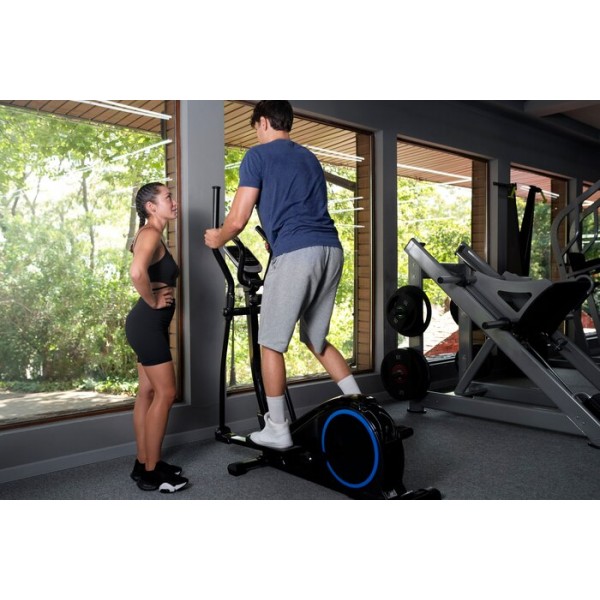
Cross trainers are stationary exercise machines that mimic walking, running, and stair-climbing activities but do not put pressure on the joints while performing the exercises. They consist of upper-body handlebars combined with the pedaling activity for the lower body. Due to the structure of the frame of cross trainers, including long foot bars, a flywheel, and upright handlebars, traditional cross trainers are usually large and bulky. This is why folding cross trainers are becoming popular now.
Can Cross Trainers Be Folded for Storage?
Yes, there are some types of cross trainers (ellipticals) that can be folded to store them; however, this completely depends on the particular model being used. Folding cross trainers are built with space-saving facilities to minimize their space when they are not being used. It is advisable to read the specifications of folding cross trainers before purchasing one.
How Do Folding Cross Trainers Work?
Folding cross trainers use one of the following approaches:
- Vertical fold: The foot rails and the flywheel unit rotate to rise into an upright position against the main frame. This happens just like folding treadmills operate, and is typical for compact elliptical machines that use up minimal space on the floor.
- Hinge-fold at the base: The base of the equipment folds by using a hinged mechanism located centrally between the two stabilizer bars in front and back. This type of fold does not lower the height but decreases the length of the machine.
Many folding machines have transport wheels attached to their base, allowing for transporting them without lifting them from the floor when folded (and sometimes, when not).
Benefits of a Foldable Cross Trainer
- Savings on Space: The most immediate benefit is the capacity of being able to save valuable space when not using the equipment a great fit for apartments, home offices, or multipurpose spaces.
- Portability: Having wheels built into the machine enables porting it around different rooms and even hide it away after the training session is done.
- Suitability for small households: Folding options provide a good reason to consider home cardio equipment even if there is no separate gym room available.
- Usually cheaper: Folding compact machines targeted at home use are usually cheaper and lighter compared to commercial machines.
Foldable vs. Non-Folding Cross Trainers: Which Should You Choose?
| Factor | Foldable Cross Trainer | Standard Cross Trainer |
| Storage footprint | Small when folded | Fixed, larger footprint |
| Stability | Good, but hinge-dependent | Excellent, rigid frame |
| Portability | High (often has wheels) | Low |
| Price range | Generally lower to mid-range | Mid to high-end |
| Best for | Apartments, shared spaces, light-to-moderate use | Dedicated home gyms, frequent/heavy use |
If saving space is your primary concern, and you exercise a few times per week, you would be better off going with the foldable cross trainer. If you need durability like that of the gym, and you will use the equipment on a daily basis at high intensity, then you should go for the regular one.
How Should You Store a Foldable Cross Trainer?
Correct storage may help to preserve the machine and make it ready for future use.
Clean the Machine
Clean the machine by removing sweat and moisture from the handles, frame, console, and other easy-to-reach parts. The sweat itself may cause deterioration or corrosion.
Secure Moving Parts
Refer to the manufacturer’s recommendations on how to secure the pedals and other moving parts before folding the machine.
Use the Locking Mechanism
Be sure that the machine is properly locked into the storage mode before leaving it unattended.
Keep It Away From Moisture
The storage place should be dry. Do not leave the equipment in locations where it may get into contact with rain, high humidity, or standing water.
Avoid Blocking Walkways
A folded cross trainer may be quite heavy and awkward to move rapidly. Be sure that there will be no tripping hazards while storing the machine.
Tips for Storing a Folded Cross Trainer
- Ensure that the equipment is placed against a flat surface to keep it stable.
- Place a floor mat under it to protect the floor from being scratched and to absorb any sweat.
- Make sure you do not place it in a damp area because the metals can rust.
- Regular inspection of folding hinge bolts is necessary in order to ensure that they are tightened.
What Is a Treadmill Deck?
Treadmill deck refers to the platform located beneath the treadmill belt. The purpose of the treadmill deck is to provide support to the exerciser while he walks, runs, or jogs on the treadmill. The purpose of the treadmill deck is also to provide support to the running belt and cushioning system.
Parts of the Deck System of a Treadmill are as follows:
- Treadmill Running Belt
- Deck Board
- Suspension/Cushioning Components
- Treadmill Rollers
- Treadmill Frame
- Treadmill Motor/Drive System
The Treadmill Deck must be able to withstand foot impact along with maintaining stability and cushioning properties.
Are Treadmill Decks Shock-Absorbing?
Absolutely, most contemporary treadmills have decks that feature cushioning systems or shock absorbers that will reduce the impact of your feet while working out. Different types of materials such as elastomers and springs are used under the belt in order to achieve the required shock absorption while exercising. Yet, different machines have different levels of cushioning.
How Treadmill Decks Absorb Shock
1. Deck Padding and Layered Cushioning
The deck of the treadmill uses foam, rubber, or elastomer material that gets compressed with the contact of feet to make the exercise less joint-intensive and more comfortable.
2. Shock Absorbers and Suspension Systems
This flexing of the treadmill surface by shock absorbers results in the reduction of the force of impact on the body before resuming its normal position.
3. Variable Cushioning Zones
Modern treadmill surfaces have varying cushioning zones depending on the area where the impact occurs and the areas that will require more stability while running and pushing.
4. Deck Thickness and Material Quality
A thicker and good-quality treadmill surface provides uniform flex and durability, whereas a thinner one becomes hard due to the compression of the cushioning material.
How Can You Tell If a Treadmill Has a Shock-Absorbing Deck?
The cushioning system can generally be found by examining the product specifications and product information provided by the manufacturer.
Look for terms such as:
- Shock absorption
- Cushioned deck
- Suspension deck
- Impact reduction
- Flex cushioning
- Deck cushioning
- Elastomer cushioning
- Adjustable cushioning
Should be used, but be sure that you do not get fooled by marketing jargon. If cushioning matters to you, then examine how it works and test the treadmill.
Treadmill Shock Absorption vs. Outdoor Running
Treadmill running and outdoor running have their own mechanical and environmental differences. The treadmill presents a stable platform that runs underneath your feet. In addition, the treadmill deck can include cushioning elements that are not included in hard surfaces such as concrete.
Outdoor running, on the other hand, involves a runner being exposed to various terrains, slopes, and weather conditions. Both alternatives cannot be called superior to the other by default. It all depends on the needs and preferences of an athlete.
Conclusion
The foldable cross-trainer would be a good option for those with less storage room available. In contrast, the regular cross-trainers could have more stability and durability when it comes to intense exercises. Treadmill decks could have a cushioning system that would assist with dispersing the impact. When shopping for either of the two machines, consider comparing the folding capabilities, stability, cushioning, and durability of the machines.